How I Healed My Body with Yoga, Meditation, and Ancient Chinese Wisdom
After months of fatigue and low energy, I started blending yoga, meditation, and traditional Chinese wellness practices into my daily routine. It wasn’t a quick fix, but over time, I noticed real shifts—better sleep, less tension, and more inner calm. This isn’t about curing anything, but about supporting the body’s natural ability to restore balance. If you're feeling worn down and stuck in recovery, this journey might resonate with you. What began as a quiet experiment in self-care grew into a profound transformation, not because of dramatic interventions, but because of consistent, gentle choices that honored my body’s rhythms. This is not a miracle story, but a realistic account of how ancient wisdom, when applied with patience, can meet modern struggles with deep compassion.
The Breaking Point: When Modern Life Took Its Toll
For years, life moved at a steady pace—children to raise, meals to prepare, responsibilities to manage. I prided myself on being capable, the kind of woman who could handle everything without complaint. But slowly, the weight of daily demands began to show. I woke up tired, even after eight hours of sleep. My digestion felt off, my shoulders were always tight, and I found myself snapping at small things. I visited my doctor, hoping for answers. Blood tests came back normal. No deficiencies. No disease markers. The verdict? “You’re fine. Just stressed.”
But I didn’t feel fine. The absence of a diagnosis didn’t erase the reality of my exhaustion. I felt dismissed, as if my experience wasn’t valid because it didn’t fit into a medical category. I began to wonder: if my body wasn’t technically sick, why did it feel so out of sync? That question led me to explore beyond conventional medicine. I started reading about holistic health, not because I distrusted doctors, but because I sensed something deeper was at play—something that labs couldn’t measure. I realized I had been treating my body like a machine, pushing it through long days without rest, nourishment, or stillness. It wasn’t broken, but it was depleted. And healing, I would learn, wasn’t about fixing a part, but about restoring the whole.
Rediscovering Balance: The Core Idea Behind Traditional Chinese Medicine (TCM)
Traditional Chinese Medicine (TCM) offered a framework that made sense of my experience. At its heart is the concept of Qi (pronounced “chee”), the vital energy that flows through the body along pathways called meridians. When Qi moves freely, we feel energized, calm, and resilient. When it becomes blocked or imbalanced, we experience fatigue, emotional swings, or physical discomfort. Unlike Western medicine, which often isolates symptoms, TCM looks at the person as an integrated system. It asks not just “What’s wrong?” but “Why is this happening now?”
A key principle in TCM is the balance between Yin and Yang. Yin represents rest, nourishment, and internal stillness—qualities like coolness, moisture, and receptivity. Yang is activity, warmth, and outward expression. In modern life, many of us live in a state of excess Yang: over-scheduled, overstimulated, and under-rested. This can deplete Yin, leading to symptoms like insomnia, dryness, irritability, and burnout. TCM doesn’t see these as separate issues but as signs of a deeper imbalance.
The organs in TCM are not just physical structures but functional systems tied to emotions and energy patterns. For example, the Liver in TCM governs the smooth flow of Qi and is linked to frustration and anger when stagnant. The Spleen (which includes aspects of digestion and energy production) is vulnerable to overthinking and dampness from poor diet. The Heart houses the Shen, or spirit, and when unbalanced, can lead to anxiety or trouble focusing. Healing, then, is not about targeting one organ but about restoring harmony across the entire system. This perspective gave me permission to slow down, to listen, and to treat my body with the care it deserved—not as a problem to solve, but as a living, breathing ecosystem.
Yoga as Gentle Therapy: Moving Energy Without Strain
Yoga entered my life not as a fitness trend, but as a form of gentle movement that respected my limits. I had tried high-intensity workouts before, but they left me more drained than before. What I needed wasn’t more exertion, but a way to move that supported my recovery. That’s when I discovered Yin and Restorative Yoga—styles that emphasize stillness, long holds, and deep relaxation. These practices don’t build strength in the conventional sense, but they cultivate resilience by teaching the body how to release tension and restore energy.
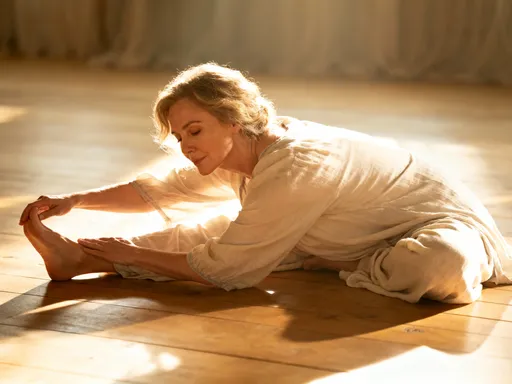
Each pose is held for three to five minutes, allowing the connective tissues—ligaments, joints, and fascia—to gently stretch. This kind of movement is especially beneficial for improving circulation and stimulating the flow of Qi through the meridians. For example, a simple forward fold can engage the Liver and Gallbladder meridians, helping to release stored tension. A supported heart opener like Sphinx Pose can nourish the Heart and Lung meridians, promoting emotional openness and deeper breathing. The emphasis is not on how deep you go, but on how present you are.
My daily routine is modest—just 15 to 20 minutes—but consistent. I begin with seated breathwork, then move into a sequence of three or four poses, each supported by props like bolsters and blankets. I focus on linking breath with movement, inhaling to create space, exhaling to surrender. Over time, I’ve noticed changes not just in my flexibility, but in my nervous system. I’m less reactive. My shoulders don’t creep up toward my ears during the day. I sleep more soundly. Yoga, in this form, isn’t about performance. It’s about presence. It’s about giving the body a chance to recalibrate, to remember how to move with ease rather than force.
Meditation That Actually Works: Calming the Mind to Heal the Body
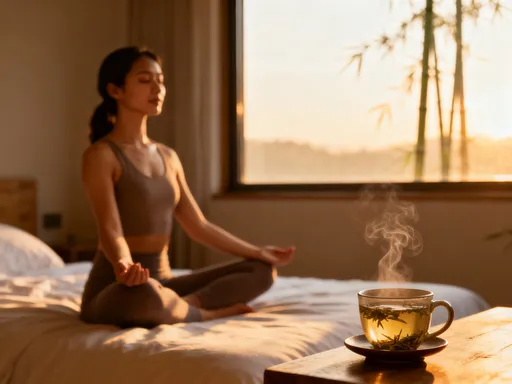
If yoga is the body’s language, meditation is the mind’s. At first, I thought meditation meant sitting perfectly still with a blank mind—a goal that felt impossible. But I soon learned that meditation isn’t about stopping thoughts, but about changing our relationship to them. The simplest and most effective practice I’ve found is breath awareness. Sitting quietly, I focus on the natural rhythm of my breath—inhaling, exhaling—without trying to change it. When my mind wanders (and it always does), I gently bring it back. This small act of returning builds mental resilience.
I also use body scan meditations, especially before bed. Lying down, I bring attention slowly from my toes to the crown of my head, noticing areas of tension or warmth. This practice helps me reconnect with my body, which I had learned to ignore during years of pushing through fatigue. It also activates the parasympathetic nervous system—the “rest and digest” mode—which is essential for healing. Studies have shown that regular meditation can reduce cortisol levels, improve immune function, and enhance emotional regulation. I didn’t need the data to believe it—I felt it in the way I began to wake up without dread, in the way small joys felt more vivid.
Another practice I’ve integrated is mindful walking. Instead of rushing from one task to the next, I take short walks with full attention—feeling my feet touch the ground, listening to the sounds around me, noticing the air on my skin. These moments of presence break the cycle of constant doing and return me to being. I start with just ten minutes a day, but even that small investment has made a difference. My anxiety has softened. I’m more patient with my family. And perhaps most importantly, I’ve regained a sense of inner quiet—a space where I can hear myself again.
Combining Forces: Where Yoga, Meditation, and TCM Intersect
What makes this approach powerful is not any single practice, but how they work together. Yoga moves the body and opens the meridians, allowing Qi to flow more freely. Meditation calms the mind and nourishes the Shen, supporting emotional balance. TCM provides the map—helping me understand what my symptoms might be telling me and how to respond with wisdom rather than fear.
One of the most impactful insights I’ve gained is the importance of daily rhythm. In TCM, each organ system is most active during a two-hour window in the 24-hour cycle. For example, the Liver is most active between 1 a.m. and 3 a.m.—a time when deep rest supports detoxification and emotional processing. If I’m awake during this period, I may wake up angry or restless. The Lung governs 3 a.m. to 5 a.m., a time linked to grief and letting go. By aligning my routine with these rhythms—going to bed early, eating meals at regular times, avoiding screens at night—I’ve found greater stability in both body and mood.
My morning routine now includes gentle stretching, a few minutes of meditation, and a warm cup of ginger tea to awaken the Spleen and Stomach. In the evening, I do a short restorative yoga sequence and a body scan to prepare for sleep. These practices aren’t rigid rules, but rhythms that support my natural energy. When I honor them, I feel more grounded. When I don’t, I notice the difference—usually in the form of fatigue or irritability. This isn’t about perfection, but about awareness. It’s about learning to read my body’s signals and responding with care.
Supportive Habits: Diet, Sleep, and Lifestyle Tweaks That Make a Difference
Healing isn’t just about what we do on the mat or cushion—it’s also about how we live the rest of our lives. One of the most significant changes I made was to my diet. Inspired by TCM, I began to eat more warm, cooked foods—soups, stews, steamed vegetables—especially in the colder months. Raw salads and cold drinks, while healthy in theory, can weaken digestive fire (known as the Spleen Qi in TCM), leading to bloating and fatigue. By warming my food and eating mindfully, I noticed my digestion improved, and my energy became more stable.
Seasonal eating also became a guide. In winter, I focus on root vegetables, bone broths, and warming spices like cinnamon and cardamom. In summer, I include more cooling foods like cucumbers and melons, but still avoid excessive ice. This doesn’t mean I never eat dessert or drink coffee—I do—but I’ve learned to balance indulgences with nourishment. I also pay attention to meal timing, eating the largest meal at lunch when digestive energy is strongest, and keeping dinner light and early.
Sleep has become non-negotiable. I aim to be in bed by 10 p.m., knowing that the hours before midnight are especially restorative. This shift wasn’t easy at first—I had to let go of the idea that productivity meant staying up late. But the trade-off has been worth it: deeper sleep, clearer thinking, and greater emotional resilience. I also protect my rest by avoiding overexertion. I’ve learned to pause before I feel exhausted, to say no when needed, and to embrace rest as an act of strength, not laziness. These habits aren’t extreme—they’re sustainable. And over time, they’ve woven themselves into the fabric of my daily life.
Realistic Expectations: What Changed, What Didn’t, and Why Patience Matters
I won’t pretend that every day is perfect. There are still moments of fatigue, days when my patience wears thin, times when old habits creep back in. Healing is not linear. Some weeks I feel amazing; others, I need to scale back. But the difference now is that I have tools. I know how to listen to my body, how to adjust, how to return to balance. My energy is more consistent. My sleep is deeper. I feel more present with my family, more connected to myself.
The changes didn’t happen overnight. They came from showing up, day after day, even when I didn’t feel like it. Consistency, not intensity, has been the key. I didn’t need to do an hour of yoga or meditate for an hour to see results. Ten minutes of stillness, a few gentle stretches—these small acts, repeated over time, created a foundation of resilience. I also learned to integrate these practices without guilt or pressure. If I miss a day, I don’t berate myself. I simply begin again.
It’s important to say that this path is not a replacement for medical care. I continue to see my doctor and value modern medicine. But I now see holistic practices as essential companions—ways to support the body’s innate wisdom. If you’re on a healing journey, know that progress may be slow, but it is real. You don’t have to do everything at once. Start with one small change—five minutes of breathwork, a warm meal, an early bedtime. Trust that over time, these choices add up. Healing is not about fixing yourself, but about returning to yourself, gently and with compassion.
Healing isn’t about perfection—it’s about showing up gently, day after day. By weaving together yoga, meditation, and traditional Chinese wisdom, I found a sustainable path to feeling more like myself again. This approach isn’t a substitute for medical care, but a supportive companion on the road to rehabilitation. If you’re rebuilding your health, remember: small, steady steps often lead the farthest.